
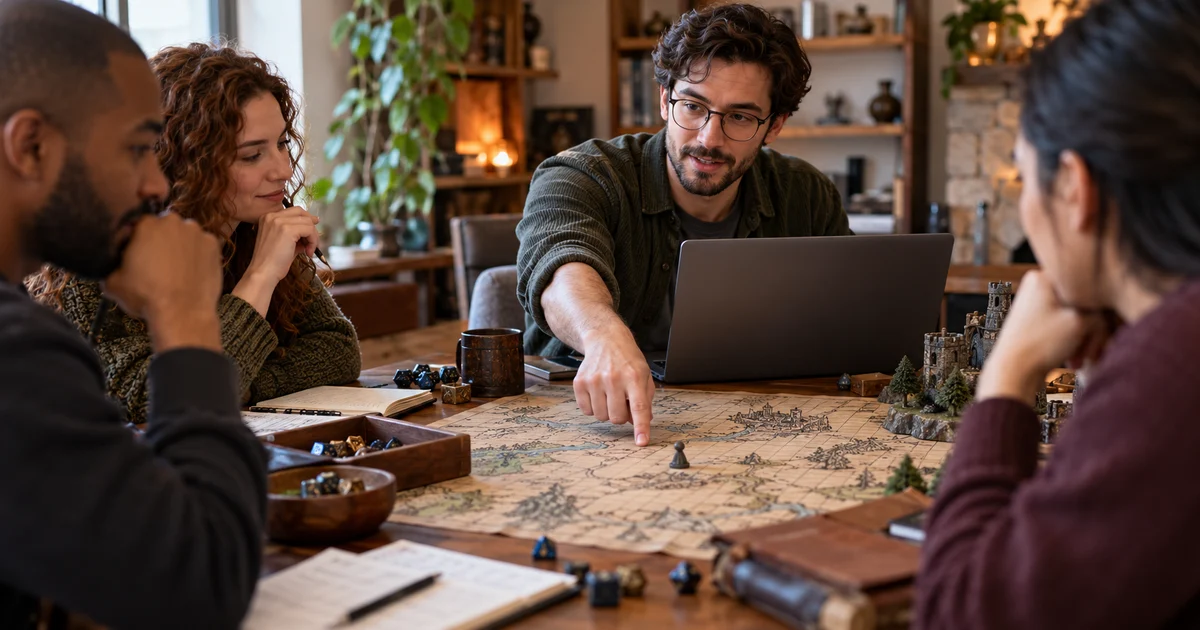
Confirm the destination before resolving the route
A ping can help the table look at the same place. Pointing at a door and resolving how a character reaches it are separate steps. Before moving the piece, confirm the indicated point and the route the player proposes.
DMGrid documents pings, a tactical board, a distance ruler and a separate player display. We do not present a ping as a movement command or an automatic check of passage, visibility or cost. This guide offers a table procedure that distinguishes attention from resolution.
Two doors on the same wall
Imagine an original scene: a map shows two doors, and a player says, “I go towards that one.” The game master can indicate a door and ask whether it is the intended destination. That confirmation resolves spatial ambiguity; it does not yet determine whether the character can reach it this turn.
Next ask for the route: around the table drawn in the room, or on its other side? Before moving the piece, apply the rules and obstacles your group has agreed. We assign no universal distance or cost to an illustration; the actual scale and situation matter.
A short sequence for a shared decision
You can structure the exchange as follows:
- Identify: indicate the destination and confirm everyone means the same point.
- Propose: describe the character’s intended route.
- Resolve: check what the situation and chosen rules allow, using measurement as support where appropriate.
- Record: reflect the agreed final position and any necessary notes after resolution.
This is a conversation procedure, not a documented button sequence. If the route changes during checking, the first measurement does not establish the second route’s distance.
Indicate only what you want to share
The DMGrid facts describe manually hidden areas and pieces, with hidden, visible and explored fog states. Before indicating something, consider what information you intend players to see. A reference clear from the game master’s view may need another explanation for people unaware of a hidden detail.
We establish no specific policy about pings crossing hidden areas or revealing secrets: check the controls and display you use. The example helps identify “that door” without accidentally narrating something the characters do not yet know.
Choose by how you play
DMGrid is a Windows beta for running in-person 5E campaigns on one computer, with local data and no browser multiplayer rooms. It uses a paid one-device license. Read its presentation before buying. In your next scene, separate the point you indicate from the route you resolve: the map communicates a proposal and the table decides what happens.