
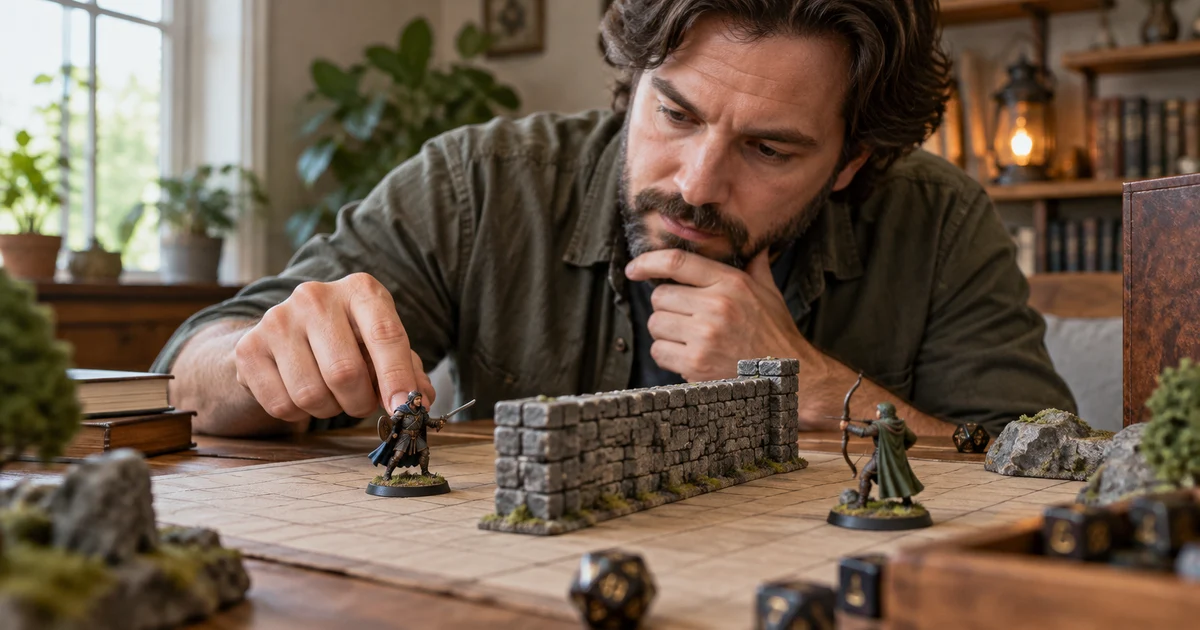
First decide whether the obstacle protects the target from that origin
Under the 2024 D&D rules, Half Cover adds two to Armor Class and Dexterity saving throws when applicable. Having a wall somewhere on the map is not enough: check whether it stands between the target and the attack or effect’s origin. The same target position may create a different situation from another direction.
DMGrid provides a board, pieces and table tools; this guide proposes a manual procedure for the Dungeon Master. It does not attribute automatic cover or line-of-sight calculation to the application.
An attack total of fifteen against AC fourteen
Original scene: a scout has AC 14 and shelters behind a low wall. Before the roll, the DM determines that it offers Half Cover against an archer on the other side. We are not deriving that fraction from a cell count or the illustrative cover image.
The example attack totals 15, without a natural 20 or a special rule changing its outcome. For this resolution, 14 + 2 = 16: fifteen does not reach that AC. Without cover, that same total would reach fourteen.
Now imagine another attacker acting from a direction the wall does not protect. The DM must review that new origin; do not retain +2 against everyone merely because the target stayed in its cell. Nor should you permanently change the scout’s base AC to remember one attack’s circumstance.
What to retain in a note
An invented table note could say:
Scout, base AC 14. Half Cover from the low wall against the northern archer. For this attack: AC 16; attack total 15, misses. Reassess cover if the origin or position changes.
The note retains who benefits, against whom and why. It does not replace the scene’s adjudication. If the drawing leaves height, position or exposure unclear, clarify them at the table before assigning a degree of cover.
You can prepare the pieces and obstacle on DMGrid’s board and use campaign or session notes to remember the decision. Its official facts page documents the tactical board, turn order and notes; that documentation does not turn this example into a rules-engine demonstration.
Do not add obstacles as separate bonuses
The 2024 cover rule distinguishes Half, Three-Quarters and Total Cover. When multiple sources protect the same target, use the most protective degree rather than adding benefits together. Check the actual degree; do not turn two Half Cover obstacles into +4.
To use this at your table, pick a simple scene, identify the origin, target and obstacle, and agree on the ruling before rolling. DMGrid is a paid Windows beta with campaign data saved on the computer; it is not a browser multiplayer room. Before buying, review the information and the recorded board walkthrough. Published videos include recordings that retain an earlier beta interface; they are not a demonstration of automatic cover calculation. The note’s value is reconstructing your decision, not promising that the board resolves it automatically.